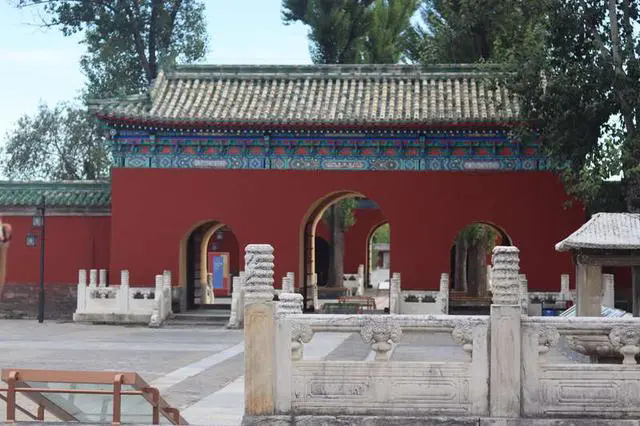
The Altar of the God of Agriculture
Introduction
The Altar of the God of Agriculture is a historically significant site located near the southern section of Beijing Central Axis. It serves as a testament to China's long-standing emphasis on agriculture, which has been a cornerstone of the country's culture and economy for millennia. Originally built as an imperial sacrificial complex, the altar was a place where emperors performed rituals seeking divine favor for favorable weather, successful harvests, and the prosperity of the nation. These ceremonies underscored agriculture’s pivotal role in ancient Chinese governance and society. Today, this site has evolved into an educational hub, where visitors can engage with the rich agricultural heritage of China through various public activities, such as spring planting events and autumn harvest festivals. The altar complex, now part of the Beijing Ancient Architecture Museum, offers an invaluable insight into the cultural and historical significance of agriculture in Chinese civilization.
History
The origins of the Altar of the God of Agriculture date back to the Ming (1368-1644) and Qing (1644-1911) dynasties, during which it served as a ceremonial site for imperial rituals. It is reported that in 1531, during the reign of Ming Emperor Jiajing, the altar was first constructed to the east of its current location, and later on in 1753, Qing Emperor Qianlong relocated it to its present site. Throughout the centuries, emperors participated in ceremonial tilling of the land at this altar, symbolizing their commitment to agricultural development and the welfare of the populace. Sacrificial offerings, which included grains stored at the Shencang or Divine Granary, were an integral part of these rituals, highlighting the centrality of agriculture. Over time, despite its historical importance, the site remained largely inaccessible to the public. However, recent efforts have been made to open the site and its accompanying granary to visitors, showcasing its historical and cultural significance.
Architectural Design
Structure
The architectural design of the Altar of the God of Agriculture reflects its ceremonial importance and the practical needs associated with agricultural rituals. The complex originally consisted of structures designed for multiple purposes, such as storing and processing grain. The granary buildings were equipped with skylights for ventilation to prevent mildew, and the ceilings were painted with coiled flower patterns using a pigment mixed with realgar—a compound of arsenic and sulfur—to ward off pests. These design features were not only functional but also indicative of the meticulous planning involved in preserving agricultural produce for ceremonial use.
Symbolism
Symbolically, the Altar of the God of Agriculture represents the ancient Chinese governance principle that agriculture forms the foundation of a prosperous society. The rituals performed here by emperors were meant to embody this belief, reinforcing agriculture's status at the heart of national policy and cultural identity. The altar’s design and location within the broader context of the Beijing Central Axis also highlight the symbolic role of agriculture in maintaining social harmony and political stability, as envisioned in traditional Chinese philosophy.
Cultural Significance
The cultural significance of the Altar of the God of Agriculture is profound, as it represents the deep-rooted connection between Chinese civilization and agriculture. The site was a focal point for rituals that emphasized the emperor's role as a mediator between the divine and the earthly realms, ensuring fertile land and abundant harvests. These rites were not merely agricultural in nature but also reinforced the socio-political order, with the emperor symbolically plowing the first furrow as a gesture of leadership and responsibility. Present-day activities at the site continue to celebrate this rich cultural heritage, allowing modern visitors to explore and appreciate the longstanding traditions and practices associated with agriculture in China.
Restoration and Preservation
Efforts to restore and preserve the Altar of the God of Agriculture have been ongoing, reflecting a broader commitment to maintaining Beijing's historical and cultural landmarks. Renovations of the Divine Granary Complex have been particularly noteworthy, as they have transformed the previously secluded site into an accessible venue for public education and cultural engagement. Restoration projects aim to recover not only the physical structure but also the cultural narratives associated with it. By employing modern exhibition techniques, the Beijing Ancient Architecture Museum is working to convey the historical changes and cultural meanings of the altar to a wider audience, thus ensuring its preservation for future generations.
Influence on Modern Culture
The Altar of the God of Agriculture continues to exert a significant influence on modern culture, both as an educational resource and a cultural landmark. As part of the Beijing Central Axis, the altar contributes to a broader understanding of Chinese urban planning and architectural heritage. Public interest in the altar has been revitalized through various interactive and immersive activities that connect contemporary audiences with traditional practices. Through these initiatives, the altar not only preserves its historical significance but also becomes a living part of China's cultural landscape, fostering a deeper appreciation for the agricultural traditions that have shaped the nation's history and identity.








